

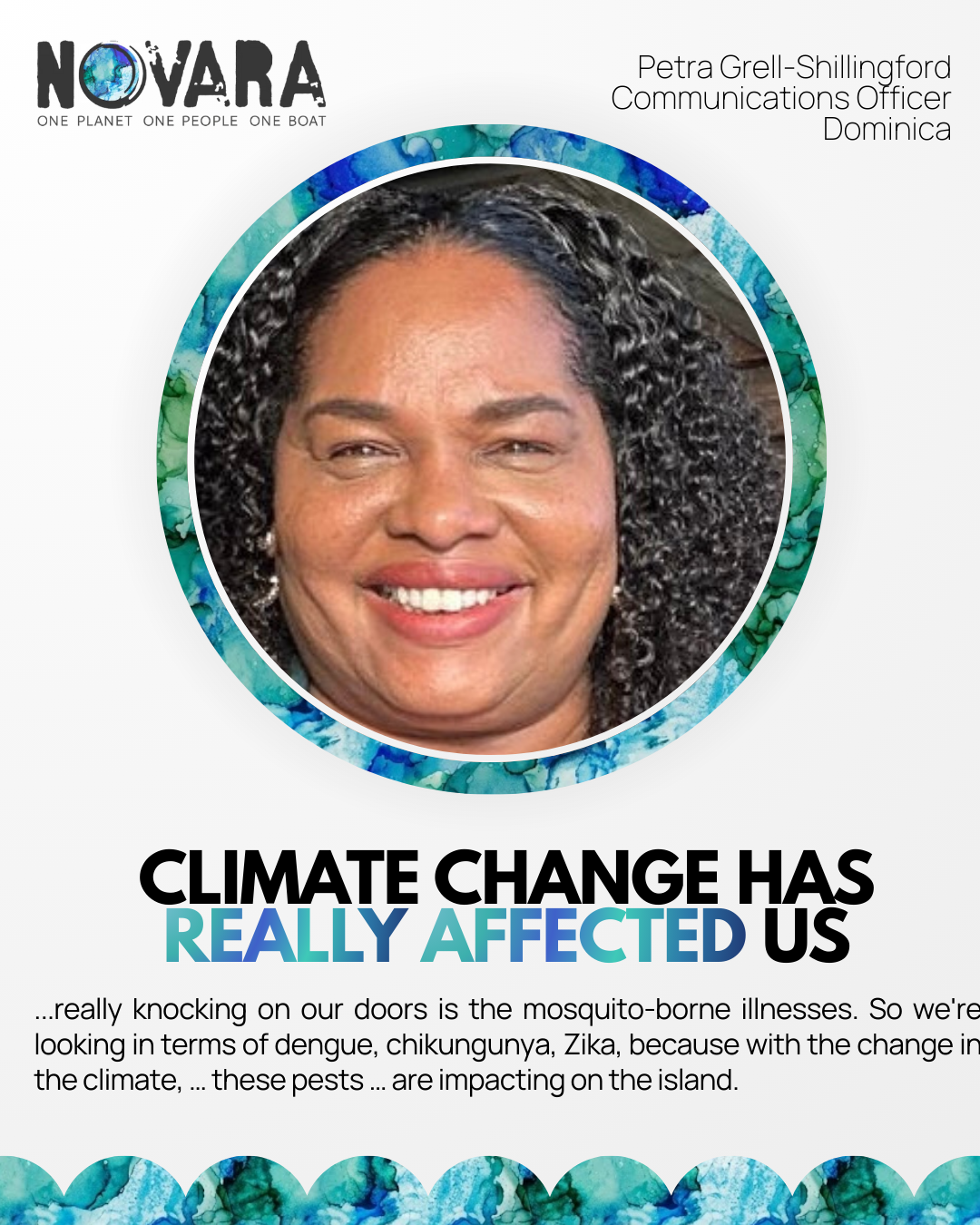
08 Feb Podcast – Petra Grell-Shillingford, Dominica
In the heart of the Caribbean, Dominica stands as a testament to resilience and adaptation. Following the devastation caused by Hurricane Maria in 2017, the island has embarked on a remarkable journey of recovery, focusing on sustainable agriculture, community engagement, and environmental stewardship. This blog post explores the stories and initiatives that exemplify Dominica’s commitment to rebuilding better and stronger.
Understanding Dominica’s Landscape:
Dominica, known as the Nature Island, is in the Windward Islands of the Caribbean. With a population deeply rooted in agriculture and fishing, the island’s economy has traditionally relied on these sectors. Petra Gryll Schillingford, Communications Officer for the Ministry of Agriculture, Fisheries, and the Blue Economy, highlights the importance of these industries and their role in fostering self-sustainability. Dominica’s primary language is English, but the rich cultural heritage also includes a local dialect known as Patois.
The Impact of Hurricane Maria:
Hurricane Maria, a Category 5 hurricane, struck Dominica in September 2017, leaving a trail of destruction that affected every aspect of life on the island. The aftermath was devastating, with livelihoods, homes, and infrastructure obliterated. Petra reflects on the lessons learned from previous disasters, such as Hurricane David in 1979, which prompted a collective shift in mindset towards resilience and recovery.
Rebuilding with Resilience in Mind:
The government of Dominica recognized the need for a transformative approach to rebuilding. This included not only reconstructing homes and infrastructure but also integrating resilience into every aspect of planning and development. The focus shifted from traditional building materials to sustainable options, exploring geothermal, wind, and solar energy sources. This holistic approach aims to create a more sustainable future for the island’s inhabitants.
Embracing Sustainable Agriculture:
One of the crucial aspects of Dominica’s recovery has been the revitalization of agriculture. Petra discusses initiatives like the coconut and cocoa replanting exercises, which provide farmers with the necessary resources to rebuild their orchards. The government has facilitated access to free planting materials, enabling farmers to cultivate crops that not only meet local needs but also tap into lucrative export markets. Avocados, for instance, are in high demand due to their quality and versatility in various culinary applications.
Innovative Approaches to the Blue Economy:
In addition to agriculture, Dominica is making strides in exploring the blue economy. The establishment of a sperm whale reserve exemplifies the island’s commitment to marine conservation. This initiative, backed by research from Project CETI, aims to protect the natural habitat of sperm whales while promoting eco-tourism. National Geographic’s interest in this project highlights its potential to attract visitors and support local economies.
Addressing Climate Change:
As Dominica rebuilds, the impact of climate change is ever-present. Petra notes the rising temperatures and the challenges posed by phenomena like the El Niño effect. These changes necessitate innovative agricultural practices, such as the use of greenhouses to protect crops from extreme weather conditions. The island is also grappling with the effects of sargassum seaweed, which poses a threat to local fisheries and ecosystems.
Key Takeaways:
The journey of resilience in Dominica is an inspiring story of community, adaptation, and hope. Through sustainable practices in agriculture and the blue economy, the island is not only recovering from past traumas but is also laying the groundwork for a more resilient future. Dominica’s experience serves as a valuable case study for other regions facing similar challenges in the wake of climate change and natural disasters.
Tags: Dominica, resilience, Hurricane Maria, agriculture, blue economy, sustainable development, climate change, eco-tourism, community engagement.
Listen to our podcast series on coastal community resilience ‘Stories on the edge’. Available on Apple, Spotify and YouTube. Join Veronica Lysaght and Dr Nigel Jollands as they talk with people from the coastal communities they’ve visited on their expedition schooner, Novara. Hear the inspiring and sometimes challenging stories of how communities deal with a changing climate. In a very real sense these are ‘stories on the edge’.
No Comments